Winter can be magical…🤨
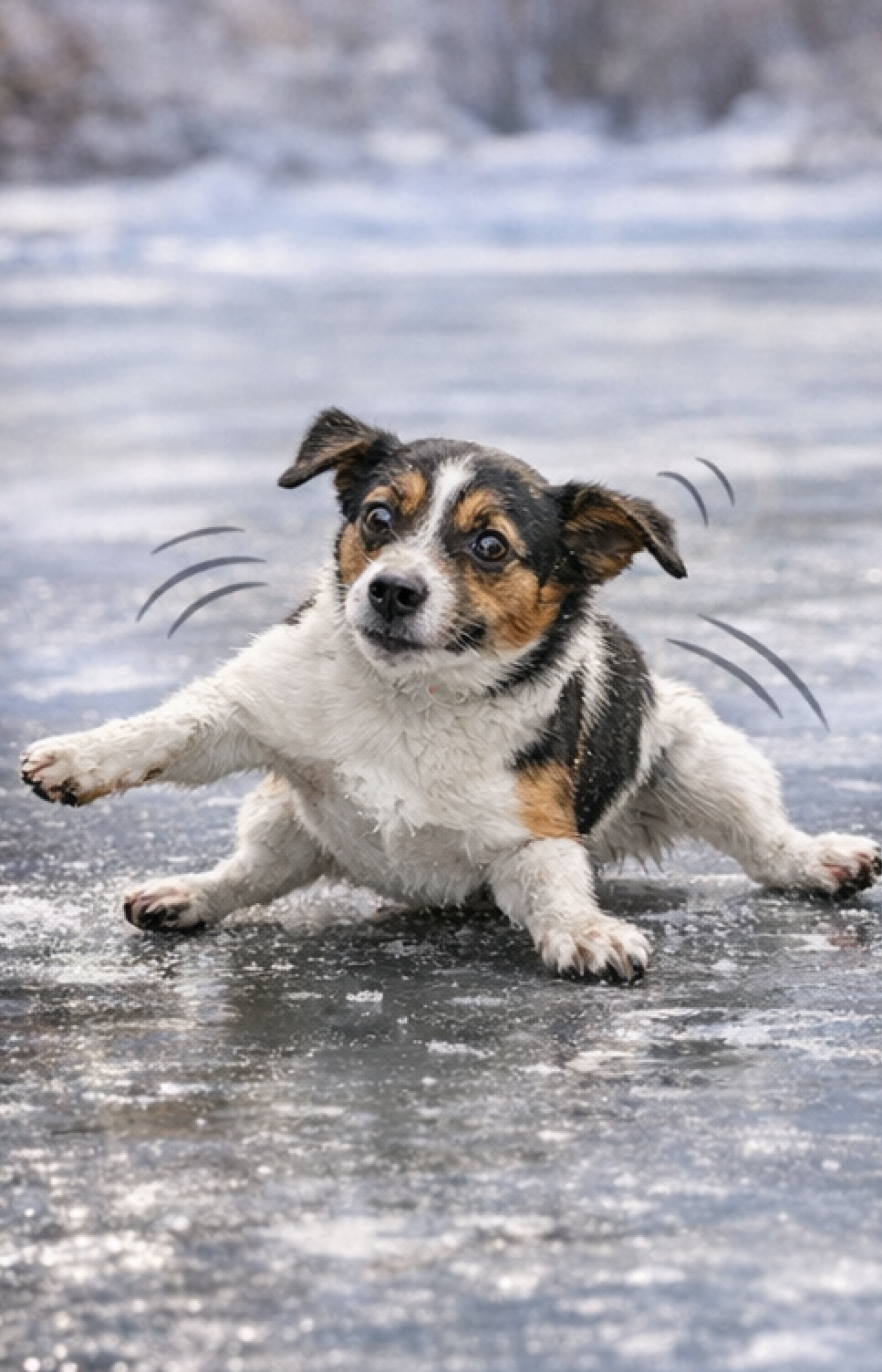
Well ok, if you have a senior dog or one recovering from injury, it can also be nerve-wracking. Icy porches, frozen sidewalks, and slick driveways increase the risk of slips, near-falls, and painful setbacks.
Even if your dog doesn’t fully slip, slippery footing can still cause harm. Have you ever tried walking on a slippery surface when your joints or back hurt? You feel like “Bambi on ice”. You (and your dog) tense your muscles while off weighting the sore limb, throwing everything off balance. This can leads to compensation, strain, and delay recovery.
I see a lot of winter related injuries in my canine rehab practice which is a big part of why I am writing this blog now! Keep reading for helpful tips to avoid winter injuries and don’y forget to download the FREE PDF at the end of this article!
🧠 Why Injured or Older Dogs Are at Higher Risk of Slips
Reduced proprioception doesn’t just apply to dogs with neurologic issues. After an injury, or just as part of the natural aging process, a dog’s proprioception (their body’s ability to sense where each part of their body is in space) is reduced which is we focus on things like balance, coordination, and strengthening exercises in rehab.
This reduction in proprioception means:
- Less control over where their paws land
- Slower reaction time if they loose footing
- Compensation through other joints and muscles
- Pain flare-ups just from trying to stay upright
Falls are a problem but so is micro-sliding. Those small slips and unstable steps force dogs to brace, twist, and overload other areas.
🧊 Make Outdoor Surfaces Safer
Slips can happen right outside the door, or even coming back in the house at the end of a walk.
Add traction where it counts:
- Rubber-backed mats on stairs, decks, and entryways
- Sprinkle sand, gravel, or non-clumping cat litter on icy walkways
- Shovel snow promptly — packed snow becomes ice
- Keep a support sling or harness in the doorway to for quick access
- Keep doorways and walk ways well light
- Assess conditions are like before heading out and avoid any sketchy footing
Download our FREE Home Mobility Assessment Checklist
⚠️ What You Need to Know About Road Salt & Ice Melts
All ice melts come with some kind of risk to pets, even the “safe” ones.
They work by lowering the freezing point and many (even pet safe ones) contain chemicals that irritate skin and are toxic if licked off paws. 😵
Common ice melts contain sodium chloride aka – rock salt – BAD 👉 highly toxic ! This is what typical road salt is! 😱
According to PetMD, the “Pet-safe” melts usually contain urea as the main ingredient. These are only slightly safer as they can still cause vomiting or diarrhea, paw irritation, and are often less effective at melting ice.
ALWAYS clean your pet’s paws thoroughly when they come in!
🐕🦺 Gear That Helps
- Booties can protect paws, but be cautious. Thick boots may reduce proprioception, especially in neurological cases, and they can still be slippery
- Please use both front and back ends of your dog’s Help em Up harness for better control and stability. You can also us a hip-support or lifting harnesses for seniors or post-op dogs. Don’t have anything? Grab a reusable shopping bag and cut the sides out and use it like a sling.
- Avoid retractable leash as you have little control on ice or maneuvering your dog quickly if needed
- If using a winter jacket, make sure it does’t inhibit your dog’s shoulder movement
- Be seen! Put something bright or flashy on you dog and yourself so drivers see you and you don’t have to quickly get out of the way.
- Put grips on your boots too! Nothing worse then you going down while trying to keep your dog up!
❤️🩹 Care That Helps
- Before:
- Warm up your dog and wake up their muscle with gentle tapping, brisk brush strokes and little nudges side to side for about 15-20 seconds, in standing.
- During:
- Keep walks shorter when it’s slippery (or in deep snow).
- Use sidewalks when you can and watch for fast drivers. Another reason to keep your dog on a shorter leash.
- Consider mall walks and doing your dog’s PT exercises 😉 as an exercise alternative.
- Walk slow and keep your dog on leash when conditions are slippery.
- Provide light support for the hind end especially on stairs (here’s a helpful hack) . Going down stairs, you’re like the rear brake on a bike. Slow them down and steady them.
- After:
- Slow walk to cool down and they may require a jacket so their muscles don’t get cold too quickly.
- Provide support when entering the home as door frames are often slippery.
- Gentle massage post walk to relax muscles.
🐾 Paw Care Essentials
- Clean and dry paws after every walk.
- Inspect paws for cracks, cuts, or irritation.
- Carefully trim excess hair around the paws.
- Apply a paw balm to protect and moisturize pads.
.
🗝️ Key Takeaways
Avoiding slips and near-slips reduces compensation, protects injured joints, and supports better recovery. If your dog is recovering from injury or struggling with mobility this winter, virtual mobility consults can help you create a safe, season-appropriate plan
By improving traction, avoiding risky conditions, slowing down, using supportive gear, and caring for paws, you can help your dog stay comfortable and mobile all winter long.
Safe winter walks mean a happier dog and better mobility in the long run—even on the iciest days. 💙
👉🖨️ DOWNLOAD YOUR FREE PDF CHECKLIST NOW and keep your dog safe and active this winter
💛 Thank you for reading. Be sure to download your free pdf checklist AND share this with a friend or on social and help keep our dogs active and safe this winter!
🎥 Related Content 📖
- 7 Factors to Help a Senior Dog with Hindlimb Weakness
- Hip Dysplasia in Dogs: What You Really Need to Know (and What Actually Helps)
- Is Your Dog Slowing Down?
- Length Matters. What pedicures have to do with mobility & injury prevention
- Top 5 Tips for Living with A Down Dog
- Relaxing Dog Massage video
- How to stretch your Dog’s Hips and Shoulders
- For live tips and Q&A join our free facebook community inside Living with Dogs with Disabilities